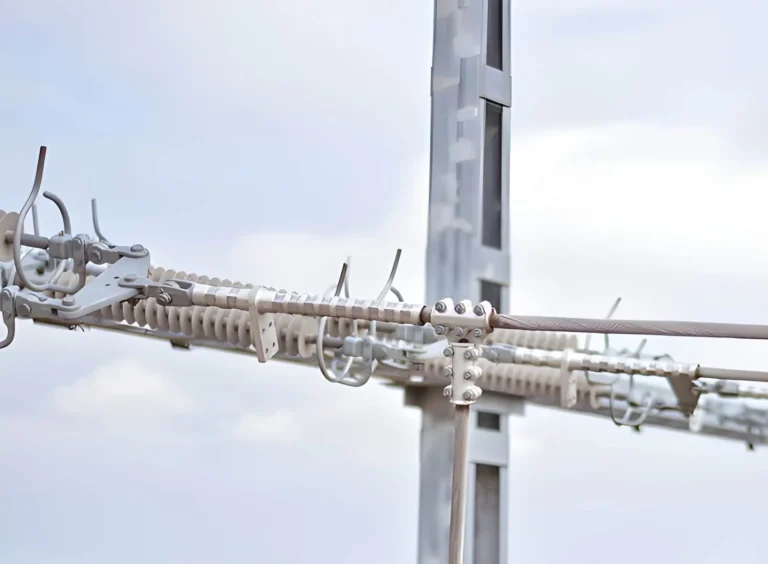





Parallel Groove Clamp: What It Is and How to Use It
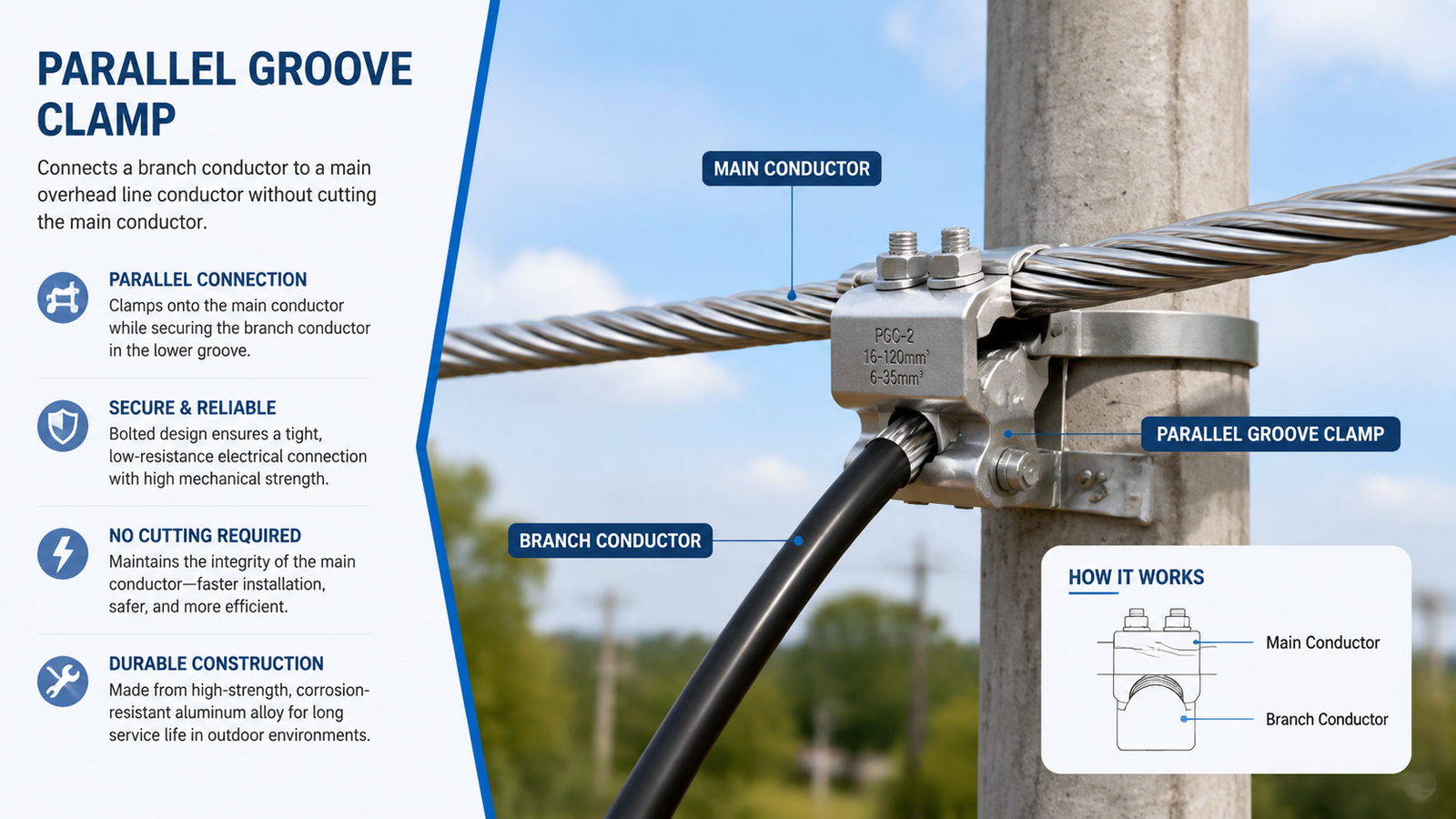
A parallel groove clamp (PG clamp) is a bolted connector that joins two parallel conductors on an overhead line without cutting or stripping them. The short answer: it is the standard fitting for tapping a branch conductor off a main line, making jumper connections, and joining conductors in substations, because it installs with a wrench in minutes, needs no crimping tool or welding, and keeps contact resistance low. If your project connects conductors in parallel on poles, towers, or in a substation, a parallel groove clamp is usually the fastest reliable option.
This guide explains how a parallel groove clamp works, where it belongs on the line, how to install it correctly, and how to pick the right one for your conductor sizes.
What Is a Parallel Groove Clamp?
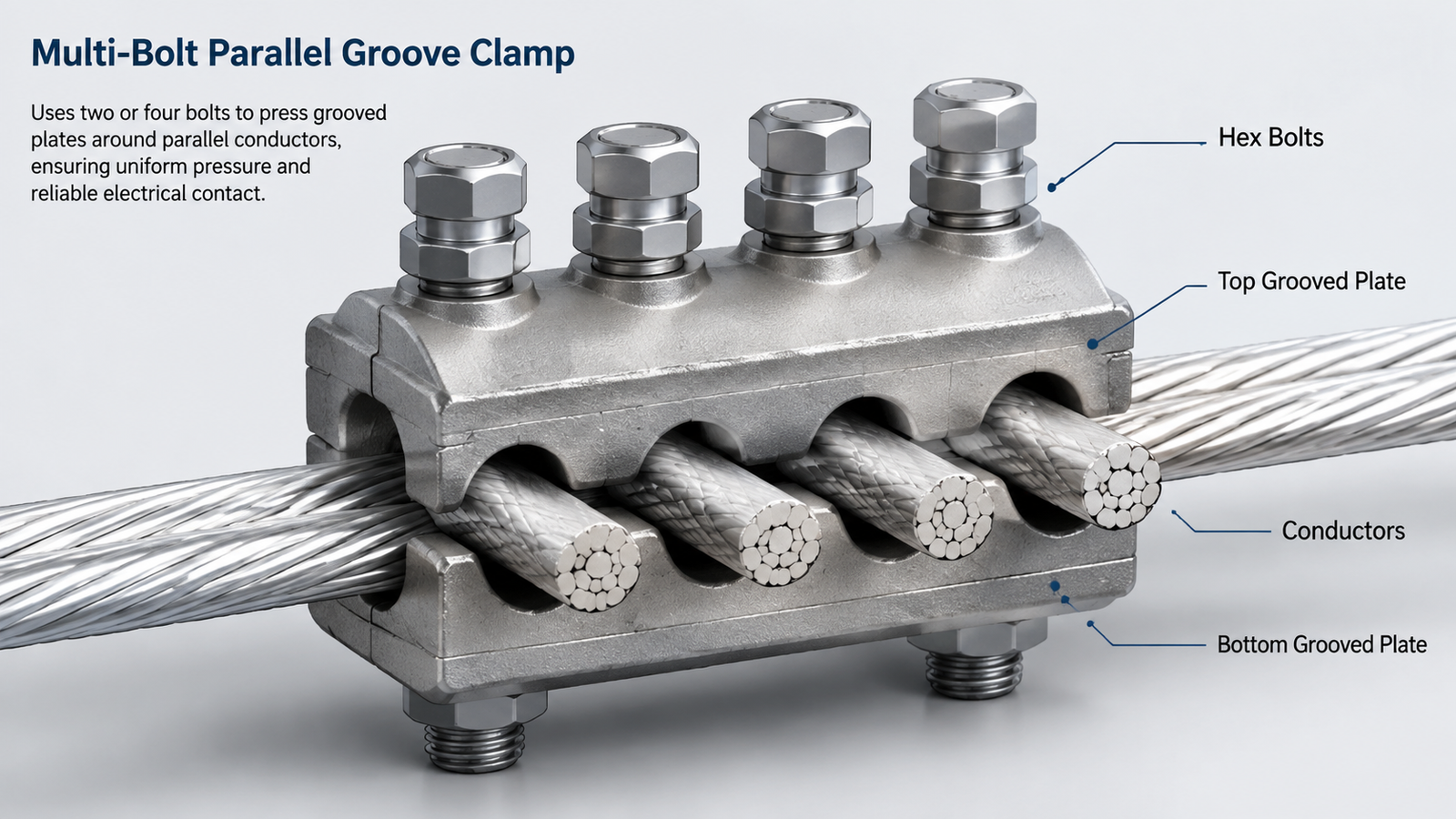
A parallel groove clamp consists of two grooved plates and one or more bolts. The two conductors sit side by side in the grooves, and tightening the bolts squeezes the plates together, creating both a mechanical grip and an electrical connection between the conductors. The conductor is never cut, stripped, or deformed, which is why the clamp can be installed, inspected, and removed without disturbing the line.
PG clamps are made from aluminum alloy, copper alloy, or a copper-aluminum transition design, with hot-dip galvanized or stainless steel bolts. Single-bolt, double-bolt, and four-bolt versions handle different conductor sizes and load requirements. For connecting aluminum to copper, a bimetal or transformed clamp such as the CAPG copper-aluminum butt splicing clamp is used to prevent galvanic corrosion.
How a Parallel Groove Clamp Works
The working principle is simple: bolt pressure creates contact. When the bolts are tightened to the specified torque, the grooved plates press the conductors together over a large contact area. That large contact surface keeps resistance low, which means less heat and less energy loss at the joint.
Because the connection is mechanical rather than metallurgical, a PG clamp can be loosened for inspection and re-tightened during maintenance. It also tolerates the thermal expansion and contraction cycles that overhead conductors experience, which is a key reason it stays reliable for decades on distribution and transmission lines.
Where Parallel Groove Clamps Are Used
- Tapping branch lines. Connecting a service drop or branch conductor to a main distribution conductor is the most common PG clamp job.
- Jumper connections. At angle and dead-end structures, PG clamps join jumper conductors across insulator strings.
- Substations. Busbar jumpers, transformer terminals, and equipment connections use PG clamps for flexible, reliable routing.
- Grounding and neutral connections. PG clamps tie grounding conductors and neutrals in distribution networks.
- Bypass and repair. Damaged conductor sections can be bridged with a parallel clamp without cutting the line.
- Renewable and railway projects. Solar farms, wind plants, and railway electrification use PG clamps for feeder and catenary connections.
Key Advantages of Parallel Groove Clamps
- Tool-free installation. Only a wrench and the specified torque are needed; no crimping tool, die, or welding equipment.
- Low contact resistance. The large, even contact area keeps the joint cool and efficient under load.
- Reusable and serviceable. The clamp can be loosened for inspection and re-tightened, which simplifies maintenance.
- No conductor damage. The conductor is not cut or deformed, preserving its full mechanical strength.
- Corrosion resistance. Aluminum alloy bodies and galvanized or stainless bolts survive coastal and industrial atmospheres.
- Versatile material pairing. Aluminum-to-aluminum, copper-to-copper, and copper-aluminum transition versions cover mixed-metal joints.
How to Install a Parallel Groove Clamp
- Clean the conductors. Remove oxide and dirt from the contact area with a wire brush.
- Apply anti-oxidant compound. On aluminum conductors, a thin layer of inhibitor paste prevents oxide from reforming.
- Position the conductors. Lay both conductors into the grooves side by side so they sit fully in contact.
- Tighten the bolts evenly. Alternate between bolts in small steps so pressure builds uniformly across the groove.
- Apply the specified torque. Use a torque wrench and the manufacturer’s value, typically in the 20-70 Nm range depending on size.
- Inspect the joint. Confirm full contact, no conductor damage, and correct alignment before energizing.
How to Choose the Right Parallel Groove Clamp
Match the clamp to the actual job with these checks:
- Conductor range. The clamp’s groove range must cover both conductor diameters, for example 16-240 mm² or 50-400 mm².
- Material pairing. Aluminum conductors use aluminum clamps; mixed aluminum-copper joints need a bimetal or transformed clamp.
- Bolt count. Single-bolt clamps suit small taps; double- and four-bolt clamps handle larger conductors and higher loads.
- Standards. Look for compliance with IEC 61284, IEEE/ANSI C119.4, and relevant national specifications.
- Environment. Coastal and industrial sites favor hot-dip galvanized bolts and surface-treated bodies.
Common Mistakes to Avoid
- Mixing aluminum and copper without a transition clamp. Direct contact corrodes at the joint.
- Skipping conductor cleaning. Oxide and dirt raise resistance and cause hot spots.
- Under-torquing the bolts. A loose clamp slips under load and the contact resistance climbs.
- Tightening one bolt fully before the others. Uneven pressure weakens the electrical contact.
- Using the clamp outside its conductor range. An oversized groove cannot develop enough pressure for a reliable joint.
- Reusing a heavily loaded clamp. Removal reduces grip; install a new clamp after a long-service joint is opened.
FAQ
What is a parallel groove clamp used for?
A parallel groove clamp joins two parallel conductors on an overhead line, most often to tap a branch conductor off a main line or to make jumper connections. It is also used in substations and grounding systems.
Does a parallel groove clamp require a crimping tool?
No. A PG clamp is installed with a wrench and tightened to the specified torque. This makes it faster and easier to install than compression connectors.
Can a parallel groove clamp connect copper and aluminum conductors?
Only with the right transition design. Use a bimetal or transformed copper-aluminum clamp to prevent galvanic corrosion between the two metals.
Is a parallel groove clamp reusable?
It can be loosened for inspection and re-tightened during maintenance. However, after a long service life under load, replacing it with a new clamp is the safer choice because removal reduces the grip.
What conductors can be connected with a PG clamp?
PG clamps work with bare overhead conductors such as ACSR, AAAC, and AAC, as well as copper conductors, within the clamp’s rated range.
Why does the bolt torque matter on a parallel groove clamp?
Bolt pressure creates the electrical contact. Too little torque means high resistance and overheating; too much can crush or deform the conductor. Always use the manufacturer’s torque value.
Conclusion
A parallel groove clamp is one of the most practical fittings on an overhead line: it joins conductors in minutes without special tools, holds up for decades, and keeps the joint cool and efficient. Match the clamp to your conductor range and material pairing, clean the conductors, and torque the bolts evenly, and the connection will serve reliably for years.
If you are sourcing connectors for an overhead distribution project, browse the parallel groove clamp range, or contact our engineers with your conductor sizes and joint type for a recommendation.