




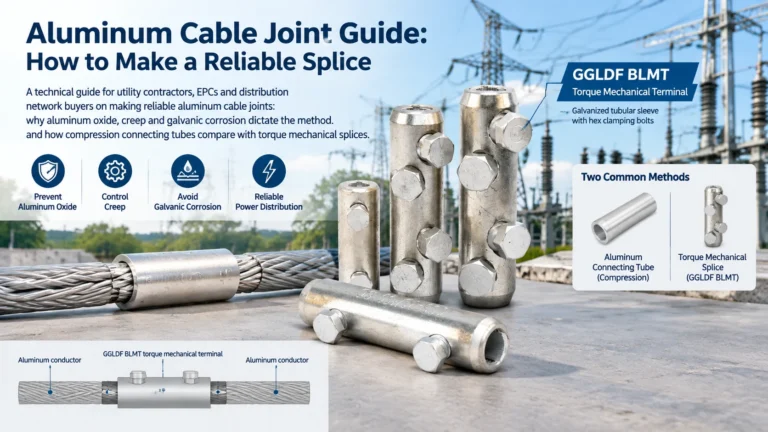
Why aluminum joints fail where copper ones do not, how compression tubes and torque mechanical splices compare, and how to make and verify a reliable aluminum cable joint.
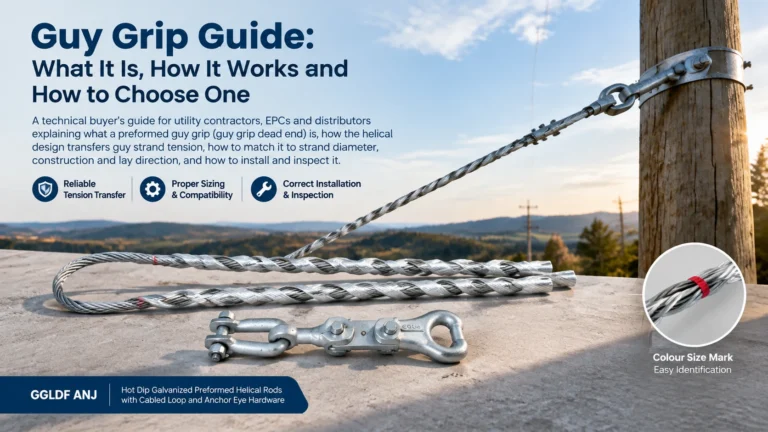
What a preformed guy grip is, how the helical dead-end grips a guy strand, how it compares with bolted guy clamps, and how to size, install and inspect it.
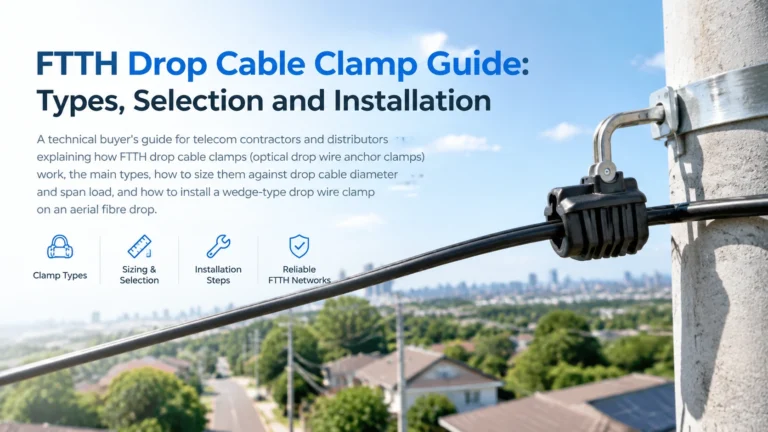
How FTTH drop cable clamps work, how to choose the right size and load rating for an aerial drop, and how to install a wedge-type drop wire clamp without damaging the fibre.
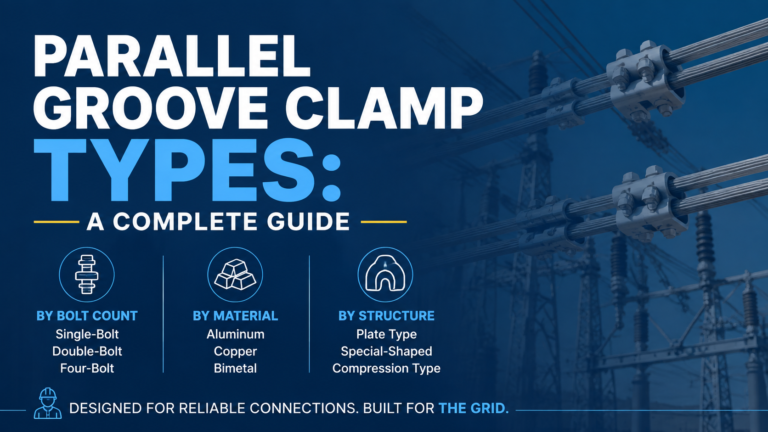
Parallel groove clamps come in several types, and picking the wrong one is a common cause of hot joints and premature failures on overhead lines. The short answer: parallel groove clamps are classified by bolt count (single, double, or four-bolt), material (aluminum, copper, or bimetal), and structure (standard plate, special-shaped, or compression). Match all three […]
A parallel groove clamp (PG clamp) is a bolted connector that joins two parallel conductors on an overhead line without cutting or stripping them. The short answer: it is the standard fitting for tapping a branch conductor off a main line, making jumper connections, and joining conductors in substations, because it installs with a wrench […]
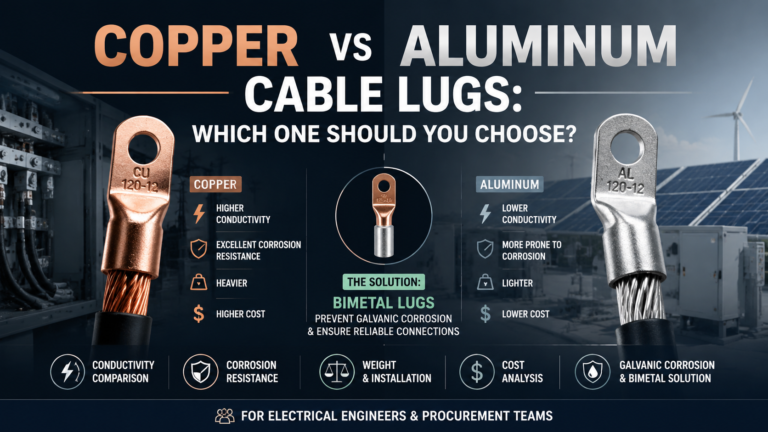
Copper and aluminum are the two standard materials for cable lugs, and the choice between them shapes the cost, weight, and long-term reliability of every electrical connection. The short answer: copper lugs win on conductivity, corrosion resistance, and mechanical strength, while aluminum lugs win on price and weight. Choose copper for critical, high-current, or harsh-environment […]
×
Get a Free Quote
We will respond to your inquiry within 24 hours
We value your privacy
To provide you with high-quality consultation and services, we use cookies to store necessary information.